A practical guide for families
What to Look for in an Organic Crib Mattress
A crib mattress is not simply a soft place to land. It is a carefully sized sleep surface, expected to fit a particular crib, stay firm and level, and meet applicable safety requirements. Organic materials may matter to families, but the label alone cannot answer the most important questions. Start with fit and firmness, then examine construction, certifications, care instructions, and the details that shape daily use.
Published November 4, 2026
Begin with safety, not a label
Shopping for a baby can make every decision feel unusually consequential. Mattress packaging often adds to the pressure with confident language about purity, comfort, and sleep. A more useful approach is to move from the most basic requirements outward: first confirm that the mattress is intended for the crib, fits it correctly, and provides a firm, flat surface. Then look at what it is made of and how those materials are described.
For safe sleep, a crib should have a firm, flat mattress covered by a tightly fitted sheet, with no loose bedding, pillows, or soft objects in the sleep space. Follow current guidance from recognized public-health authorities and the instructions supplied with the crib and mattress. An organic designation does not replace these precautions, and no mattress can by itself prevent sleep-related harm.
Check that the product is specifically designed for use in a crib and complies with the safety requirements that apply where it is sold. In the United States, federal rules address crib mattress performance and safety. Product documentation should identify the model and provide information needed to verify its intended use. If a listing is vague, a size is unclear, or the manufacturer cannot supply basic documentation, pause before buying.
It is also worth checking for recalls before purchase and again if you are considering a used mattress. Search by the exact manufacturer, model, and product identifiers using official recall resources. A familiar brand name or an appealing materials story is not a substitute for checking the particular product.
Fit is a precise measurement
A crib mattress should fit the crib it will be used in—not merely appear close in size. Cribs and mattresses are sold in standard and nonstandard configurations, and dimensions can vary. Read the crib manufacturer’s manual and the mattress specifications together. Confirm that the mattress is compatible with the specific crib model and that its stated measurements meet the crib maker’s requirements.
After placing the mattress in the crib, check the fit around the full perimeter. It should lie flat and should not bow, curl, or leave a concerning gap between its edge and the crib frame. There should be no need to force the mattress into place or compress it to make it fit. If the fit seems questionable, consult both manufacturers rather than relying on an informal rule of thumb or a retailer’s general assurance.
Measurements matter beyond the mattress itself. Confirm the crib’s usable interior dimensions, the mattress dimensions, and any limits described in the manual. For a convertible crib, check whether the same mattress is approved for the intended configuration and stage. A mattress that fits one sleep product is not automatically suitable for another, such as a bassinet or play yard.
For New York families, delivery logistics can be part of the calculation. Measure doorways, hallways, elevators, stair turns, and the space where the crib will stand. Ask how the mattress is packaged and whether it can be carried safely through the building without bending or damaging it. In a compact apartment, planning the route ahead of time can prevent a late delivery surprise—but it should never mean accepting a mattress that does not fit the crib.
Firmness and a level surface come first
Adult mattress shopping often centers on whether a bed feels plush or firm. A crib mattress calls for a different priority: a stable, firm, flat sleep surface. It should not sag under ordinary use, slope, or form a deep impression. A soft surface may feel inviting to an adult’s hand, but softness is not the goal for an infant sleep space.
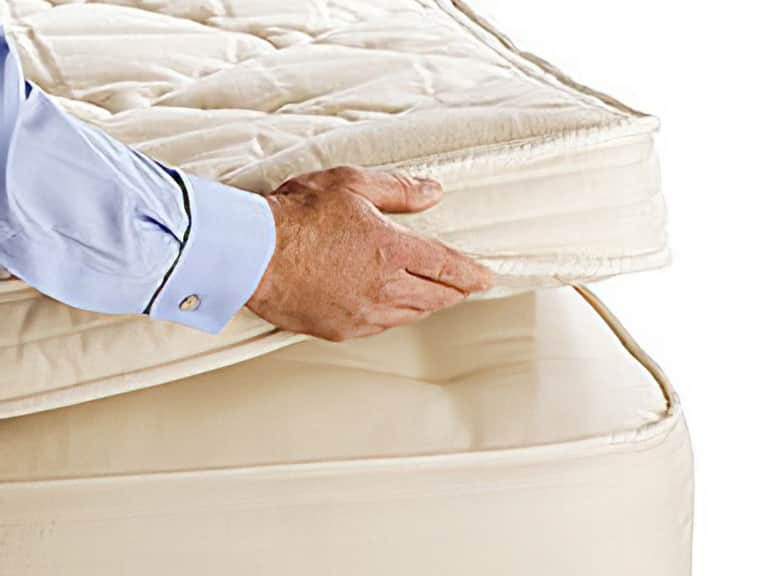
Descriptions such as “plush,” “cushioned,” or “pillow-top” deserve particular scrutiny when a product is presented for crib use. Look for clear confirmation that the mattress is intended for the exact setting and meets applicable safety standards. Do not add a topper, pillow, extra pad, or improvised layer to change its feel. These additions can alter the sleep surface and are not a substitute for buying a suitable mattress.
Some products have different surfaces or firmness levels for different stages. If a mattress has an infant side and another side intended for later use, read the instructions carefully. Confirm which side is appropriate at each stage, how to identify it, and when the manufacturer says to turn it. Do not infer the correct side from color, texture, or a salesperson’s description alone.
Over time, inspect the surface and supporting structure. Follow the maker’s directions about rotation, if any, and check for sagging, broken seams, damage, or changes in fit. Replace a mattress that no longer provides a firm, level surface or is damaged in a way that could affect safe use. A mattress protector may help keep the product clean, but it should be correctly sized, compatible with the mattress, and secured according to its instructions.
What “organic” can—and cannot—tell you
Organic is a useful starting point for asking questions, not a complete description of a crib mattress. The term may refer to one material, a component of the finished product, or a set of ingredients used in a particular layer. A product’s cover could be certified organic while its core, adhesives, waterproofing layer, or other components are made from different materials. The details vary by product.
Ask which components are organic and what portion of the finished mattress they represent. Is it the fabric, the filling, the latex, or more than one layer? Does the manufacturer provide a material breakdown? Can it identify where each material is used in the construction? Clear answers make comparison possible; broad claims without a defined scope do not.
Certification can add useful context when it is relevant to the claim. But certification names are not interchangeable, and a certificate may apply to a material, a facility, a production process, or a finished item. Read the scope and verify the certificate through the relevant certification body when possible. Check the product documentation for the exact model and components covered, rather than assuming that a logo on a category page applies to every item a company sells.
Be cautious of absolute language such as “chemical-free.” Everything made of matter consists of chemicals, including cotton, water, and wood. In consumer descriptions, the phrase may be intended to mean that certain substances or treatments were not used. Ask what specifically is excluded and whether the claim is supported by documentation. More precise statements—naming a material, treatment, or standard—are easier to assess than sweeping promises.
Likewise, “natural,” “non-toxic,” and “hypoallergenic” can be broad terms. They do not, by themselves, explain the mattress’s full construction or guarantee that every baby will tolerate every material. Families concerned about a particular substance or sensitivity can ask the manufacturer for product-specific information and speak with a qualified health professional about individual concerns.
Understand the construction, layer by layer
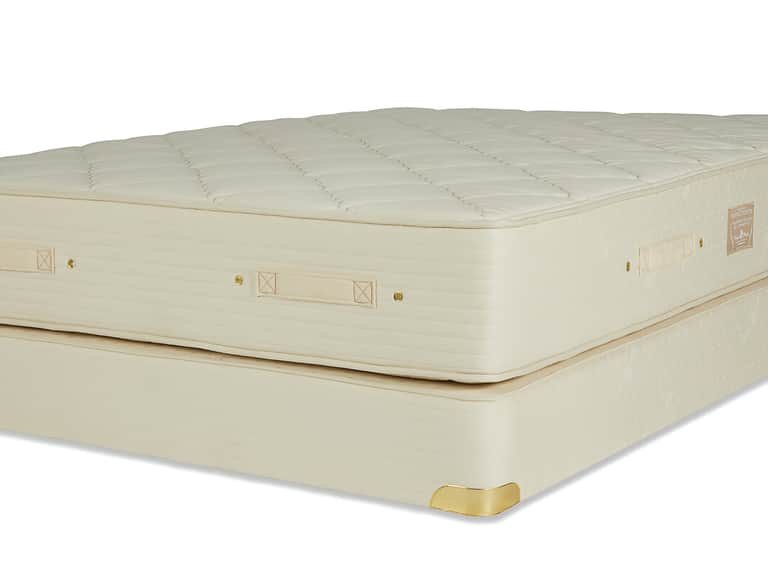
A crib mattress may combine a core, comfort or cushioning layers, an inner barrier, and an outer cover. Materials can include foam, springs, latex, cotton, wool, or other fibers. Each has different physical properties, but no material name alone tells you whether a mattress is appropriate for a particular crib or child. The construction and the finished product’s safety documentation matter.
Ask for a plain-language description of the layers. How thick is the core? What materials are in the cover and filling? Are there adhesives, coatings, or waterproofing treatments? Are seams sealed, stitched, or otherwise constructed? The answers can help you understand what you are buying and identify care needs. If a manufacturer does not disclose certain proprietary details, it should still be able to provide enough information to assess the product’s intended use and relevant certifications.
Waterproofing is another practical consideration. Some mattresses have an integrated, wipeable surface; others rely on a separate protector. Determine how to clean the surface without damaging it and whether any additional cover is allowed. Avoid layering products in ways the crib or mattress manufacturer does not recommend. A snug fit and an undisturbed, flat surface remain essential.
Weight can affect everyday handling. A mattress that needs frequent lifting for sheet changes or cleaning may be easier to manage if it is lighter, but weight should not outweigh fit, firmness, and safety. If two caregivers will use the crib, consider whether both can remove and replace the mattress without awkward lifting or compromising the fit.
Read care instructions before the first spill
Care directions are not fine print to save for later. They determine how to clean the mattress after a leak, spill, or routine mess, and whether a removable cover can be laundered. Some products permit spot cleaning only; others have a washable cover or a surface that can be wiped. Follow the instructions for the exact model, including guidance on detergents, drying, and moisture.
Do not assume the entire mattress can go into a washing machine, or that a removable-looking cover is designed to come off. Washing or drying a component incorrectly could damage it or change its fit. Ask how the mattress should be dried after cleaning and whether it must be completely dry before returning to the crib. Never use a product with lingering dampness, visible mold, or a persistent musty smell.
A properly fitted waterproof protector may help manage accidents, but confirm that it is designed for the mattress and does not alter the required fit or surface. Check it regularly for tears, loose elastic, or other damage. Keep the sleep space simple: the fitted sheet and any specifically approved protector are different from loose blankets, pillows, or padded accessories.
Storage also deserves a look. If a mattress will be kept for a future child, ask how it should be stored and inspect it carefully before reuse. Conditions matter: prolonged dampness, pests, household smoke, or damage can affect whether a product remains suitable. Check its age, model, condition, and recall status, and make sure it still fits the crib being used.
Compare warranties and real-world details
A warranty can explain what the manufacturer considers a defect, but it does not guarantee a mattress will last for a particular number of years or remain right for every child. Read the terms for exclusions, proof-of-purchase requirements, and steps for making a claim. Note whether the warranty covers the core, cover, stitching, or other components—and whether the remedy is repair, replacement, or another option.
Ask how the mattress is shipped and whether it arrives compressed or ready to use. If it is compressed, follow the manufacturer’s instructions about unpacking and allowing it to expand before use. Confirm any limits on carrying, bending, or storing the product during delivery. Keep the packaging information, manual, purchase receipt, and model details in a place you can find later.
Price should be weighed against a clear list of features, not a promise that a higher cost equals better safety. Organic materials may cost more, and certifications or manufacturing choices may be important to a family. Still, a premium price does not excuse missing size information, unclear care instructions, or an unverifiable claim. Compare equivalent facts across products: dimensions, firmness description, components, certifications, cleaning, weight, return terms, and warranty.
A focused checklist for the shop or checkout page
Before placing an order, bring together the crib manual and the mattress specifications. A short checklist can keep the decision grounded while product pages compete for attention.
- Is the mattress specifically intended for the crib and configuration you plan to use?
- Do the crib and mattress manufacturers confirm compatibility and dimensions?
- Does the mattress provide a firm, flat surface and remain level in the crib?
- Are the materials and layers described clearly enough to understand what “organic” applies to?
- Can you verify the scope and validity of any certification that matters to you?
- Are cleaning, drying, protector, and storage instructions practical for your household?
- Have you checked the exact model for recalls and reviewed the warranty and return terms?
- Can the mattress be delivered into your home and installed without damage or unsafe improvisation?
If a key answer is missing, contact the manufacturer before buying. Save the response and product documentation. A retailer can help with availability and delivery, but product-specific safety and compatibility questions are best confirmed against the manuals and manufacturer information.
A better decision is a specific one
The search for an organic crib mattress can begin with values—what materials a family prefers, what production standards it wants to support, and what it hopes to avoid. The decision becomes more reliable when those preferences are translated into verifiable questions. Which layer is certified? What does the certification cover? How does the mattress fit this crib? How firm and level is the surface? What happens when it needs cleaning?
In a crowded market, those questions cut through the noise. A thoughtfully chosen crib mattress is not defined by a single word on a label or a long list of promised benefits. It is a product whose fit, construction, intended use, and care requirements are clear—and whose materials can be evaluated with evidence rather than atmosphere.
For families in New York and beyond, the same principle applies whether shopping in a neighborhood store or ordering online: start with the crib manufacturer’s guidance, confirm the mattress’s dimensions and safety information, and treat organic claims as an invitation to look closer. The aim is not to make sleep shopping perfect. It is to make the decision informed, practical, and grounded in the features that matter most.