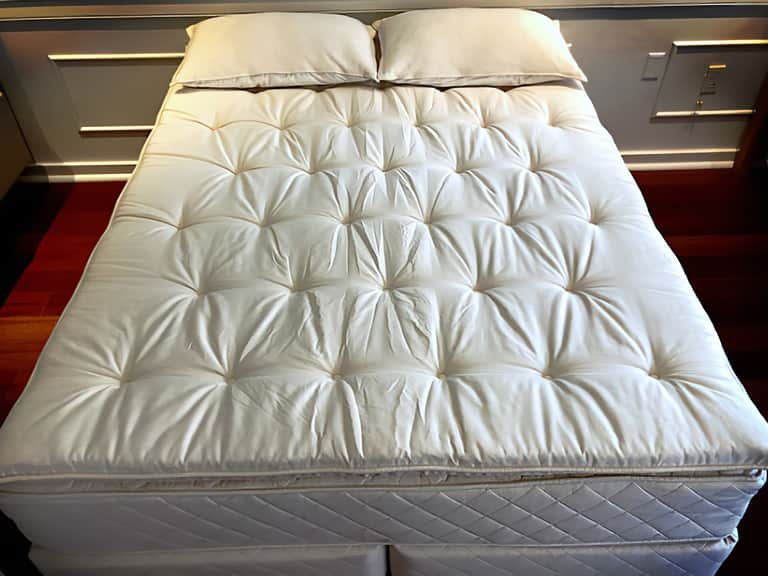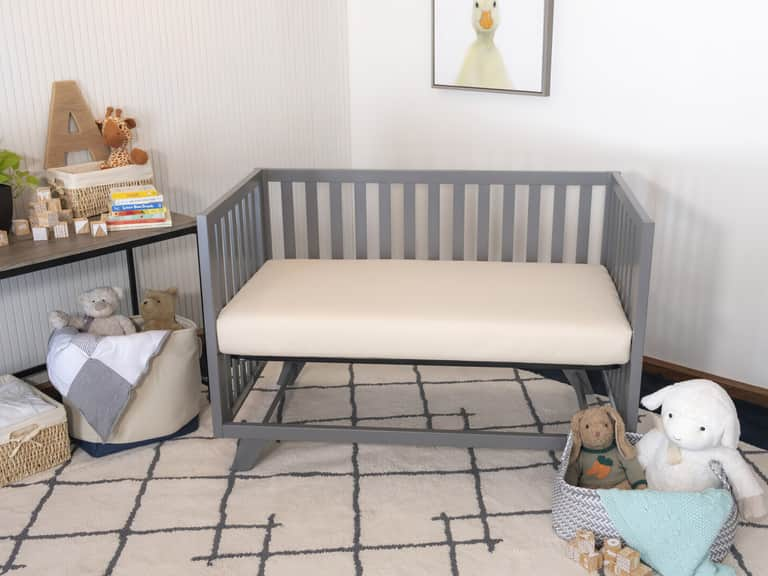
New York Mattress Guide Crib Mattress Basics
Naturepedic 2-in-1 Organic Mattress: Understanding Its Two Sides
A two-sided crib mattress is built around a simple idea: the sleep surface suitable for an infant is not necessarily the same as the one designed for a toddler. Understanding what each side is for—and what the label does and does not promise—can help caregivers compare materials, check fit, and set up a sleep space with greater confidence.
Published November 21, 2026 A practical guide to construction, fit, care, and safe-sleep considerations
The basic idea behind a two-stage mattress
In a dual-sided crib mattress, each face is intended for a different stage of a child’s development. The infant side is typically designed to be firm and flat. The toddler side may offer a different feel, often described as plusher, for use when the child is older and the product’s instructions say it is appropriate. The mattress is turned over when the maker’s age and use guidance calls for it—not simply because one side feels more comfortable to an adult.
The distinction matters because a crib mattress is not just a comfort purchase. It is part of the sleep environment, and its dimensions, surface, condition, and intended use all deserve attention. “Two-sided” or “2-in-1” describes a design feature, not a substitute for reading the full product instructions or following current safe-sleep recommendations.
Caregivers researching the Naturepedic Breathable 2-Stage Organic Crib Mattress will find a product listing that describes a firm, waterproof infant side and a plusher toddler side, along with a separate removable, breathable, washable mattress pad. These details are useful starting points, but product specifications and instructions can change. Verify the current manufacturer information for the exact model before buying, assembling, or flipping a mattress.
Infant side: firm, flat, and correctly fitted
For an infant, the central feature to examine is a firm, flat sleep surface that fits the crib as intended. Firmness in this context is not a judgment about luxury or personal preference. A surface that feels soft and yielding to an adult may not be appropriate for an infant. A firm mattress should retain its shape and should not allow the baby’s face to sink into the surface.
A correctly fitted mattress is equally important. A gap between the mattress and crib sides can create a hazard. Check the mattress dimensions against the crib manufacturer’s specifications, and use the mattress only with a compatible crib or approved sleep product. A listing may provide approximate dimensions, but the crib’s own instructions and the mattress maker’s fit guidance should settle the question.
The Naturepedic product listing gives an approximate measurement of 27¼ by 51⅝ inches and a thickness of about 6 inches. Standard-size labels alone do not guarantee a suitable fit in every crib. Measure and confirm compatibility with the specific crib, following the instructions supplied with both products. The mattress should lie flat and remain secure rather than rocking, bowing, or leaving a noticeable space at the edges.
For infant sleep, the safest setup is deliberately spare. Follow current guidance from a trusted public-health authority, such as the American Academy of Pediatrics or the U.S. Consumer Product Safety Commission, and the instructions for the specific crib and mattress. In general, the baby should be placed on their back on a firm, flat surface covered by a fitted sheet made for that mattress. Keep loose blankets, pillows, stuffed toys, and other soft objects out of the sleep space. Do not add an unapproved topper, cushion, or extra pad.
Toddler side: a later stage, not an infant alternative
The toddler side is meant for a later stage, but there is no reason to treat the word “toddler” as an automatic invitation to flip the mattress on a particular birthday. The right timing depends on the product’s instructions and the child’s transition from crib use. Check the manufacturer’s stated age guidance, any weight or developmental limits, and the crib’s own conversion instructions. If the child is approaching a transition out of the crib, follow the guidance for the crib and mattress rather than assuming that flipping alone addresses every safety question.
Different feel does not mean every dual-sided design has the same construction. Some models use different foams, coils, quilting, or other materials on opposite faces; others describe a difference in firmness or surface finish. A product name, color, or stitched pattern is not enough to identify which side is intended for which stage. Look for clear labels or instructions, and retain the manual so the information remains available when the mattress is turned.
Do not use the toddler side for an infant simply because it feels more comfortable or seems to offer extra cushioning. Nor should a caregiver infer that a firmer infant face is suitable indefinitely for every child. The manufacturer’s stage-specific directions, the child’s sleep setup, and applicable safety guidance should be considered together.
What the “organic” description tells you—and what it doesn’t
Organic claims can be meaningful, but they are specific claims about materials or production standards, not a complete evaluation of a mattress. When comparing organic crib mattresses, identify which components are certified, what the certification covers, and whether the certificate applies to the finished product or to particular materials. Read the current documentation rather than relying on a general phrase in a headline.
It is also useful to distinguish materials from performance. An organic textile claim does not by itself establish the firmness of the infant side, the dimensions of the mattress, or whether it fits a given crib. Conversely, a waterproof surface is a functional feature; it does not explain every component beneath that surface. Caregivers can compare these matters separately: material sourcing, construction, fit, cleanability, and the intended use of each side.
The Naturepedic listing describes the referenced model as an organic crib mattress and specifies a waterproof infant side, a toddler side with a different feel, and a removable breathable pad. It also describes two construction options: a lightweight version using WaveSupport technology and a traditional innerspring version. Because model names and configurations can be revised, confirm that the options, materials, certifications, and dimensions shown by the seller correspond to the product being considered.
Certifications are most useful when their scope is clear. Ask what standard is involved, which components it covers, and whether the documentation is current. Avoid treating words such as “natural,” “clean,” or “non-toxic” as complete technical explanations. A careful buyer looks for specific, verifiable information and does not confuse a material preference with a guarantee of health outcomes.
Breathable features and washable components
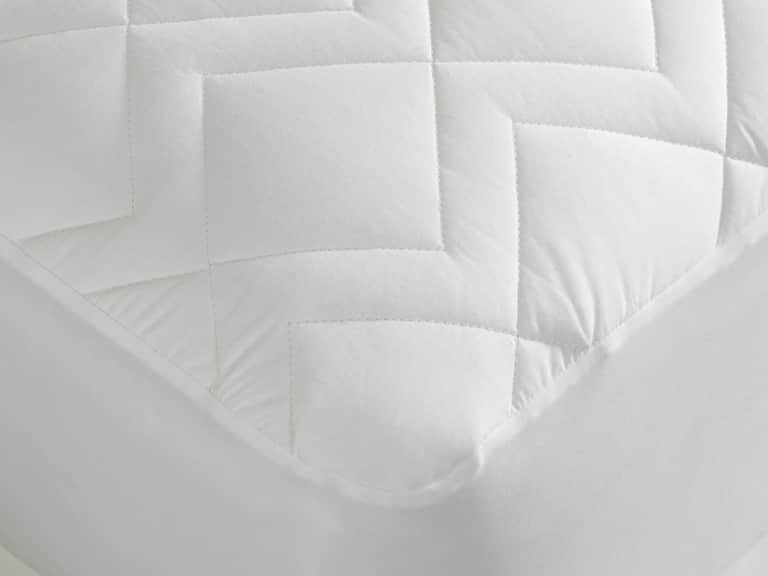
Breathability is a prominent feature in the name and description of this particular mattress. In the listing, the mattress has a removable breathable pad that can be washed, while the underlying mattress is described as having a seamless waterproof construction. These are distinct components with different jobs: a washable layer may make routine cleaning easier, and a waterproof surface may help limit liquid penetration into the mattress core.
“Breathable” should not be interpreted as permission to add bedding, use an improvised cover, or place an infant in a position that conflicts with safe-sleep guidance. Use only the components and coverings approved for the mattress, in the way the manufacturer specifies. Do not layer an additional mattress pad or topper unless the product instructions explicitly allow it. A well-intentioned extra layer can change the surface and compromise the fit of a fitted sheet.
Before washing a removable component, check its care label and the current manual. Confirm whether it should be washed in a machine, how it should be dried, and how it must be reattached. A layer that is damp, stretched, damaged, or incorrectly fitted should not be put back into service without checking the maker’s directions. Likewise, avoid cleaning the mattress with methods or products that could damage its waterproof finish or structural materials.
Care instructions are not minor print. They are part of the product’s safe and durable use. Save the manual or keep a digital copy, and contact the manufacturer if a label is missing or a cleaning question is unclear.
A practical checklist for comparing crib mattresses
Whether the search is for a Naturepedic 2-in-1 organic mattress or another dual-sided model, a short list of questions can make comparisons more useful than a broad claim about comfort or materials.
- Which face is intended for an infant? Look for an explicit label and written instructions identifying the infant side.
- What is different about the toddler side? Check whether the difference is firmness, construction, surface material, or another specified feature.
- Does the mattress fit the exact crib? Compare the measured dimensions with both manufacturers’ instructions; do not rely on “standard size” alone.
- What parts are included? Establish whether a pad, cover, or other component is part of the mattress system, and use it only as directed.
- How is the product cleaned? Check which pieces can be washed, which should be wiped, and what cleaning products or drying methods are allowed.
- What do material and certification claims cover? Seek current, specific documentation for the components or finished product being advertised.
- What are the limits of use? Review age, weight, warranty, and care terms, as well as any instructions for flipping or rotating the mattress.
- What happens if the mattress is damaged? Find out what signs of wear require stopping use and replacing the product.
This method keeps the decision grounded in verifiable specifications. It also makes room for practical differences—such as weight, cleaning routines, and household budgets—without turning any single feature into a promise of better sleep or health.
Delivery, setup, and small-space planning in New York
In New York City, a crib mattress may have to travel through a narrow hallway, a small elevator, a walk-up, or a tightly arranged nursery. Those details do not change what makes a suitable infant sleep surface, but they can affect delivery and setup. Before ordering, confirm package dimensions and weight with the seller, check building delivery rules, and measure doorways or stair turns where relevant.
If a mattress arrives compressed or wrapped, follow the exact instructions for unpacking and use. Do not guess how long it must expand or assume that an unusual shape will resolve on its own. Contact the manufacturer if it appears damaged, does not regain its expected shape, or seems inconsistent with the listed measurements. Keep packaging and order records until the product has been inspected and fitted.
Small apartments can also make storage tempting. A crib mattress should be stored and handled according to its instructions, not bent or forced into a space in a way that could damage its structure. Keep the crib area clear, and make sure the mattress is fully supported by the crib’s intended base. A snug fit is a measurement question—not something to correct with rolled towels, blankets, or other improvised fillers.
Common misconceptions about two-sided crib mattresses
“Two-sided means either side is safe from birth.” No. A dual-sided mattress assigns different uses to its faces. Follow the product’s infant and toddler directions; do not substitute one side for the other based on preference.
“Organic means every safety question is settled.” No. Organic material claims and safe use are separate subjects. Check fit, firmness, condition, labels, and the sleep-space guidance that applies.
“Breathable means extra bedding is harmless.” No. A breathable feature does not override recommendations to keep the infant sleep space clear of loose or unapproved items.
“A waterproof mattress never needs care.” No. Waterproof construction may simplify cleanup, but the product still needs inspection and the cleaning routine described by its maker. Follow directions promptly after spills or accidents.
“A crib mattress lasts as long as the crib.” Not necessarily. Check for sagging, damage, broken seams, compromised waterproofing, or other conditions identified by the manufacturer as reasons to stop using it. Do not assume that a secondhand mattress is suitable without carefully checking its age, history, condition, and fit.
When to ask for more information
Product pages can summarize a mattress, but they may not answer every setup question. Ask the manufacturer or retailer to clarify which side is intended for an infant, how the mattress should be oriented, whether a specific crib is compatible, and how the included pad is used. If product instructions conflict with the crib manual, pause and seek clarification rather than improvising.
For questions about an infant’s individual health or sleep needs, a pediatric health professional is a more appropriate source than a product description. This guide is intended to explain product features and comparison points; it is not medical advice and cannot replace current safe-sleep guidance or instructions for a particular mattress and crib.
The useful distinction is the one the manual confirms
The appeal of a two-stage crib mattress is straightforward: one product is designed to serve two stages, with a firm infant surface and a different toddler surface. The meaningful details are less abstract. They are the exact dimensions, the side labels, the materials and certifications, the construction options, the fit with a particular crib, and the care rules that keep the mattress in its intended condition.
For the Naturepedic Breathable 2-Stage model listed here, the product description identifies a firm, waterproof infant side, a plusher toddler side, and a removable breathable pad that can be washed. Those details help frame a comparison, but current product documentation should always take precedence. Confirm the exact version and follow its instructions, use the infant side as directed, and keep the sleep space simple. In the end, the “two sides” are useful only when each is used at the stage—and in the way—the maker intended.
Frequently asked questions
Can I use the toddler side for a newborn?
No. Use the side specifically identified for infant use and follow the mattress instructions. A softer feel is not a reason to use the toddler side early.
When should a two-sided mattress be flipped?
Follow the manufacturer’s stated age and use guidance. Do not choose a date based only on convenience or a general idea of when toddlers are ready.
Does the mattress need an extra protector or topper?
Use only coverings and components permitted by the mattress and crib instructions. For infant sleep, avoid adding unapproved layers that could alter the intended surface or interfere with a fitted sheet.
What is the first fit check to make?
Compare the actual mattress dimensions with the crib’s specifications and the mattress maker’s compatibility guidance. The mattress should fit securely without a hazardous gap and lie flat on the intended support.